Wais Iv Test Download
The WAIS-IV (2008) is the latest revision of the adult Wechsler battery. Provided by the test publisher. In addition, exploratory methods, when. 685 Wechsler Adult Intelligence Scale—Fourth Edition [ 151 ] not provided Wais iv test download. WAIS-IV content and structure are specifically related to current.
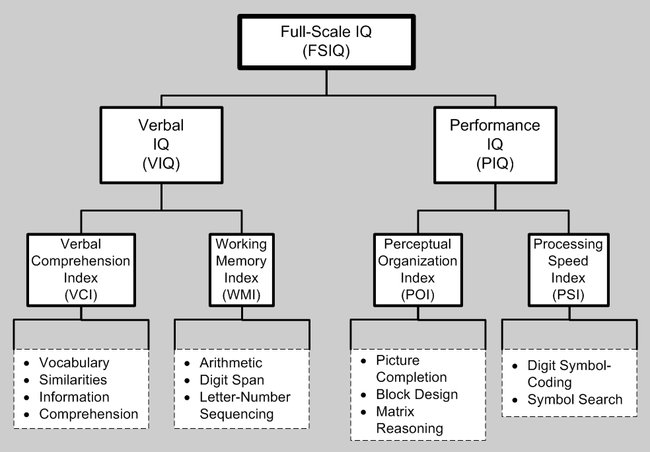
In recognition of emerging demographic and clinical trends, the WAIS IV was developed to provide you with the most advanced measure of cognitive ability and results you can trust when addressing the changing clinical landscape. Transitioned from dual IQ to Index Score structure to be consistent with the WPPSI-III and WISC-IV. Yields FSIQ and 4 Index Scores with fewer subtests (VCI, PRI, WMI, & PSI). Includes General Ability Index (GAI). Renamed Perceptual Organization Index (POI) as the Perceptual Reasoning Index PRI).
Redesigned and enhanced scoring and reporting software to improve ease of use and functionality Software WAIS IV Software Save time scoring and reporting results with the practical WAIS-IV Scoring Assistant and Report Writer Software. WAIS—IV Scoring Assistant – Just enter raw scores, and the software does the following:. Generates concise score reports and statistical reports with graphs and tables. Raw to scaled score conversions. Strength and weakness discrepancies.
Uses the PsychCorpCenter Platform as its foundation to integrate with other scoring applications and produce cross battery analysis of scores. Links to WMS-IV and WIAT-II. Upgradeable to WAIS-IV Report Writer.
Click to see enhanced user interface of the WAIS-IV Scoring Assistant. Click for a sample report from the WAIS-IV/WIAT-II Scoring Assistant WAIS—IV Report Writer - Includes all capabilities of the Scoring Assistant plus:. Produces individualized, comprehensive reports that go beyond mere scores, tables, and graphs. Non-Technical Client Report. Comprehensive Narrative Report with narrative interpretations included. Clinical and Background Review.
Interprets statistically significant discrepancies between scores. Uses the PsychCorpCenter Platform as its foundation to integrate with other report writer applications and produce cross battery analysis of scores. Links to WMS-IV and WIAT-II. Includes comprehensive user manual. Click for a sample report from the WAIS-IV Report Writer. Click for a sample interpretive report from the WAIS-IV/WMS-IV Report Writer (male/21 years) Two options for scoring and reporting the WAIS-IV are now available on Q-global. The first option is to pay per-report.

Customers who administer the WAIS-IV only a few times each year, or those who want the flexibility to pay only as the assessment is used, may prefer this option. The second option is to select an 'unlimited use' subscription, where one user of the WAIS-IV gets unlimited scoring and reporting for one, three, or five years depending on the selected term of the subscription. This may be a better option for customers who administer the WAIS-IV several times each year—and don't want to worry about keeping track of their report expenses. Q-global Unlimited-use Scoring Subscriptions Two pricing options are now available for scoring and reporting on Q-global.
In addition to the current per-report price, there is now an unlimited-use scoring and reporting subscription available in one-, three-, and five-year terms. Important note: Each subscription is per user for the WAIS-IV only and will begin on the date of order processing unless otherwise requested. WAIS-IV (Wechsler Adult Intelligence Scale®, Fourth Edition): Overview This pre-recorded 20-30 minute session allows you to learn at your leisure. All you need is access to the Internet and the sound enabled on your computer. Please keep in mind that the session may take a few minutes to load. This session provides you with essential information regarding the features of the WAIS-IV.
You will learn about some of the key differences between the WAIS-III and WAIS-IV, including examples of new subtests. This session is designed for clinicians that have not yet purchased the WAIS-IV, or those who have purchased and want to gain an overview prior to reading the manuals or attending a webinar.
This hour-and-a-half long webinar will focus on interpretation of the data from the WAIS-IV and WMS-IV. The presenter will use data from the assessment instruments to describe strengths and needs in reasoning ability and memory. The data will be linked to the demands of the individual’s functional environment in an effort to identify appropriate interventions. This webinar is designed for clinicians who are familiar with the administration and scoring of WAIS-IV and WMS-IV subtests. Date: Sep 13, 2011.
Intended for use with individuals ages 16 to 90 years, the WAIS®-IV measures cognitive ability using a core battery of 10 unique subtests. The subtests focus on four specific domains of intelligence: verbal comprehension, perceptual reasoning, working memory, and processing speed. The WAIS®-IV is based on recent research in the area of cognitive neuroscience and the theories and work of David Wechsler PhD, who is recognized as one of the most influential and respected psychologists of the 20th century. During this webinar, the presenter will describe administration and scoring of the subtests and basic interpretation of the results. Date: Sep 07, 2011. Compared to the WAIS–III, the WAIS–IV FSIQ de-emphasizes crystallized knowledge (Comprehension is supplemental), and emphasizes the contribution of Processing Speed (both Coding and Symbol Search are core). The WAIS–IV FSIQ is composed of all 10 subtests that comprise the four index scores, including the Working Memory and Processing Speed subtests.
The WAIS–III subtests used to derive the FSIQ included only one subtest from the Processing Speed scale and one additional subtest each from the Verbal Comprehension and Perceptual Organization scales. The VCI and the PRI are derived from three subtests. Are these as reliable as the WAIS–III VIQ and PIQ were? Although the WAIS–IV VCI and the PRI are derived from fewer subtests (three) than the WAIS–III VIQ and PIQ (six and five subtests, respectively), the reliabilities are comparable to or higher than the reliabilities of the WAIS–III VIQ and PIQ. Some WAIS–III subtests that demonstrated relatively lower reliability were dropped from the battery or no longer contribute to the composite scores. The reliability of the retained WAIS–IV subtests is improved relative to the WAIS–III and the new subtests that were added are more reliable than those that were dropped from the WAIS–III.
Can I substitute the supplemental subtests for a core subtest? When deriving composite scores, you can only substitute supplemental subtests substituted for core subtests that are spoiled or invalidated. Supplemental subtests are also used to provide additional information on cognitive functioning. However, you should decide before you administer the subtests which one to use to derive composite scores. If you need to use a supplemental subtest in place of a core subtest for clinical reasons, decide this before you administer the subtest—not after you have derived scaled scores. For example, an individual with motor impairment may be administered Figure Weights as a substitute for Block Design.
Supplemental subtests are also useful when the scores within an index are widely discrepant. The additional information from the supplemental subtest can help tease out factors contributing to disparate results.
Was the WAIS–IV designed to line up with CHC theory? The development of the WAIS–IV was significantly influenced by current research in neurocognitive information processing models. The creation of new subtests was equally guided by clinical research and factorial data. The Wechsler four-factor structure was first introduced as an option within the WISC–III (1991) and the WAIS–III (1997). The WAIS–IV (2008) strengthens the Wechsler four-factor model, and removes its status as optional.
The WAIS–IV subtests measure constructs that could be described using common CHC terms, such as fluid reasoning (SI, MR, FW), quantitative knowledge (AR), crystallized knowledge (VC, IN, CO), short term memory (DS, AR, LN), visual perception (BD, VP, PCm), long-term storage and retrieval (VC, IN), and processing speed (SS, CD, CA). Why was Picture Arrangement dropped? Object Assembly was also dropped for a variety of reasons. There was an emphasis on decreasing dependence on time bonus points. Object Assembly was also lengthy to administer. Subtest performance was dependent on motor performance.
In terms of user friendliness, the subtest manipulatives were heavy and contained multiple pieces that could be lost or damaged, or administered inconsistently. Some difficult choices were made in order to make room for the new subtests.
The WAIS–III version of Object Assembly can still be used, with an understanding of the possible effects of using outdated norms. Why was Information chosen as a core subtest over Comprehension?
A number of factors were considered when making this decision. Information psychometric properties such as reliability, subtest floor, gradient, and ceiling, were considered and the correlation between WISC–IV and WAIS–IV composites had an edge over Comprehension. User-friendliness factors, such as administration time and ease of recording and scoring, clearly supported Information. New maps for tomtom one xl downloads. The performance of different demographic groups was examined statistically, and results indicated smaller differences between racial/ethnic group performance and smaller differences based on level of education on Information, rather than Comprehension.
At the subtest level, Comprehension was more sensitive than Information for a number of clinical groups; however, selecting Comprehension as a core subtest did not improve the clinical sensitivity of the VCI or the FSIQ for those groups. With respect to construct coverage, the specificity (unique contribution to the battery) of Information was higher than that of Comprehension, and the g-loadings were almost identical, and there was no clear pattern of differential correlations with reasoning tasks with Information compared with Comprehension. Consideration was additionally given to customer preference, in the form of market research surveys specifically addressing this choice and that captured customers’ desire for decreased administration time. Why was a third task—Digit Span Sequencing—added to the Digit Span subtest? Digit Span Sequencing was added to increase the working memory demands of the Digit Span subtest relative to the previous version, in response to research indicating different cognitive demands for the Digit Span Forward and Digit Span Backward tasks.
The total raw score for Digit Span is now based on Digit Span Forward, Digit Span Backward, and Digit Span Sequencing. Digit Span Forward must be administered, as pilot study data indicated the omission of this task results in lower Digit Span Backward scores for some examinees (possibly due to the loss of instructional progression). Retaining Digit Span Forward also ensures sufficient floor items for examinees with intellectual disability or general intellectual deficiency. The separate process scores for each of the three tasks allow practitioners to evaluate differential performance across the tasks. Why was Arithmetic chosen as a core subtest over Letter–Number Sequencing? Arithmetic was chosen over Letter–Number Sequencing reasons similar to those for choosing Information over Comprehension. In addition, substantial revisions were made to the Arithmetic subtest to reduce the arithmetic knowledge necessary to complete items successfully and to eliminate superfluous irrelevant information.
Wais-iv Test Description
Research indicates that tasks involving cognitive arithmetic are sensitive to dementia. General Administration and Scoring. Do we have to wait for General Ability Index (GAI) tables to be generated by outside researchers? Which tables are endorsed by Pearson? It was determined during standardization that querying certain responses did not result in any additional information. You have the option to query these responses if, based on your clinical judgment, the examinee's performance on surrounding items, and other test behavior observations, you believe the examinee may be able to improve upon the initial response. However, clearly wrong responses should not be queried.
In addition, the responses marked with a (Q) in the manual must be queried. Why were the discontinue rules shortened from the WAIS–III? The shortened discontinue rules reduced the overall testing time. Standardization discontinue rules were set generously to enable the examinee to attempt all passable items, yet limit the number of items presented. Final adjustments to the discontinue rule for each subtest were made based on empirical studies of the standardization data. The percentile ranks of examinees within an age group were compared before and after application of the reduced discontinue rule. The discontinue rule was set at the lowest number of consecutive scores of 0 that resulted in a rank-order correlation of.98 or higher.
For example, the Similarities discontinue rule was five consecutive scores of 0 for standardization and was reduced to three consecutive scores of 0 for the final version of the scale. Following the reduction, 99% of the examinees’ Similarities total raw scores remained at the same relative position within their age group. What is the rule of thumb for clinical significance in base rates?

The VCI is the functional equivalent of the VIQ. Similarly, the PRI is the functional equivalent of the PIQ. You should use the VCI and PRI as you would use the VIQ and PIQ. A number of other discrepancy analyses can be conducted between the index scores (e.g., VCI versus WMI or PSI; PRI versus WMI or PSI, WMI versus PSI). The process-level discrepancy comparisons reflect the differences between scores for a subtest and the corresponding process score (i.e., Block Design BD and Block Design No Time Bonus BDN), or differences between two process scores for a single subtest (e.g., Digit Span Forward DSF and Digit Span Backward DSB). These process-level discrepancy comparisons may be of particular clinical interest.
For example, additional information on the contribution of speed to an examinee’s Block Design performance may be obtained from comparing the BD and BDN scaled scores. Prior to interpretation, the practitioner should know whether such a difference is statistically significant and how frequently it occurs in the normative sample. Clinical and Special Group Performance.
Why are the clinical studies in WAIS–IV different than those in WAIS–III? We did extensive market research with customers, using unaided questions, to determine the need for new clinical studies. New clinical groups were chosen based on these responses, including Gifted Intellectual Functioning, Borderline Intellectual Functioning, Asperger’s Disorder, Autistic Disorder, Major Depressive Disorder, and Mild Cognitive Impairment. If you are interested in conducting clinical studies with other groups, you may request permission via the following website: Pearson may provide support for such studies by providing test materials and matched control groups for comparison. Why is reliability lower for the intellectually gifted and the intellectually disabled (formerly referred to as mental retardation) special group samples than for the normative sample? This is due to the difference in the core subtests between WAIS–III and WAIS–IV; core subtests in the WAIS–IV reflect the increased emphasis on fluid reasoning, working memory, and processing speed in more recent conceptualizations of intelligence. Compared to the WAIS–III, the WAIS–IV FSIQ deemphasizes crystallized knowledge (Comprehension is supplemental), and increases the contribution of Processing Speed (both Coding and Symbol Search are core).
The WAIS–IV FSIQ is comprised of all 10 subtests that comprise the four index scores, including the Working Memory and Processing Speed subtests. The WAIS–III subtests used to derive the FSIQ included only one subtest from the Processing Speed scale, and one additional subtest each from the Verbal Comprehension and Perceptual Organization scales. Gifted examinees tend to score lower on Processing Speed subtests relative to subtests from other scales, perhaps due to a problem solving approach that stresses accuracy over speed. In addition to the difference in the core subtests on WAIS–III and WAIS–IV, the norms for the newer test are slightly harder due to the Flynn effect. Although some examinees exhibit scores that regress to the mean upon retesting, analyses of the normative data from the WAIS–III and WAIS–IV indicate that the same percentage of examinees, approximately 2%, is identified as gifted based on the FSIQ. However, the same examinees may not be identified due to the shift in the conceptualization of intelligence reflected in the core subtests that contribute to the WAIS–IV FSIQ. To meet my state’s cognitive requirements for a diagnosis of intellectual disability (formerly referred to as mental retardation), the VIQ, PIQ, and FSIQ scores must all be below 70 points.
How do I do this with WAIS–IV, which no longer has the VIQ and PIQ composite scores? States and other regulatory bodies may update their terminology in the near future. In the meantime, there is a statement on page 5 of the WAIS–IV Administration and Scoring Manual that was designed to address this situation: ' The terms VCI and PRI should be substituted for the terms VIQ and PIQ in clinical decision-making and other situations where VIQ and PIQ were previously used.' . I work in an area where many different languages are spoken.
What do I do if an examinee has recently immigrated to the United States and needs to be assessed in a language other than English? The WAIS–III has been adapted and standardized in 16 different countries. For examinees whose families have recently immigrated, these are the most current, valid tests available in their first language. Adaptations for Canada, United Kingdom, France and French-speaking Belgium, The Netherlands and Flemish-speaking Belgium, Germany, Austria and Switzerland, Sweden, Lithuania, Slovenia, Greece, Japan, South Korea, Taiwan, and Puerto Rico can be obtained by contacting Pearson. Use of these adaptations requires an examiner or experienced professional who is fluent in the examinee's language. The WAIS–IV for Canada is currently in development. Standardization projects are underway for English language versions in Australia and England; a French version is also under development for use in French-speaking Canada.
Subtest Administration and Scoring. Why are Letter–Number Sequencing, Figure Weights, and Cancellation not administered to ages 70–90? These particular subtests were omitted from the test protocol for ages 70–90 for various reasons. These subtests were not administered to ages 70–90 due to concerns with fatigue in older adults.
Standardization editions include more items, involve using longer discontinue rules, and require additional recording procedures relative to final editions of tests. These factors increase testing time. In standardization, examinees typically are administered both the main test being standardized (e.g., WAIS–IV) and various other tests required to establish validity (e.g., WMS–IV, WAIS–III). The introduction of Digit Span Sequencing decreased the unique information that Letter–Number Sequencing contributes to the battery. Figure Weights and Cancellation were new subtests, with unproven utility for older adults. All of these subtests were likely to be selected as supplemental subtests. Ultimately, the decision was made to omit these subtests for these ages.
Why was Block Design selected as the first subtest for WAIS–IV? Block Design was chosen as the first subtest because it is an engaging task that gives the examiner more opportunity to establish rapport. This is consistent with a recent revision of another Wechsler product, the WISC–IV, where Block Design as the initial subtest has been well-received by examiners.
When testing examinees with motor impairment, examiners may decide to begin with a different subtest in the interest of rapport. If you wanted to reduce the effects of speeded performance, why not eliminate time bonus points from Block Design altogether? Similar to Block Design, higher ability examinees tend to perform Visual Puzzles and Figure Weights items more quickly. Given enough time, low ability examinees can eventually respond to items correctly.
This is not the case with Matrix Reasoning. The 30 second guideline was established because completion time data indicated that the vast majority of examinees who will respond correctly do so within 30 seconds, but giving additional time to low ability examinees did not result in correct scores. A strict time limit is therefore unnecessary: Grant additional time if the examinee has established a pattern of providing delayed but correct responses as the item difficulty increases. Why is Digit Span placed so early in the subtest order? There is a distinction between reordering and sequencing: Reordering involves placing the numbers as a group prior to the letters as a group, and sequencing involves placing the numbers in numerical order and the letters in alphabetical order—regardless of which grouping comes first. The reason for instructing examinees to reorder the numbers before the letters is to provide a structured way of approaching the task, which is especially helpful for examinees that are anxious or have difficulty structuring their own work.
The WAIS–IV version of Letter–Number Sequencing introduces a new graduated teaching strategy. Using Sample Item A, the examinee is taught to reorder the number before the letter for the two-character trials.
If the examinee does not reorder correctly as instructed, no credit is awarded for a given trial on Items 1–2. Sample Item B is used to teach the examinee to sequence the numbers and letters, while maintaining the previous reordering instruction. For Items 3–10, credit is awarded for sequencing alone: Regardless of how the examinee reorders the numbers and letters, he or she is using working memory to sequence the numbers and sequence the letters. Although the incorrect reordering approach has always been infrequently observed, the graduated teaching strategy introduced for WAIS–IV has reduced the frequency of incorrect reordering even further. In addition, prior data analysis results have indicated that these items are equally difficult when either numbers or letters are given first.
What should I do if an examinee writes too faintly to be seen through the Cancellation scoring template? Individuals with color-perception differences are a group that encompasses greater than 10% of the general population. These issues are much more common in males. We have made every effort to ensure our items, including those on the WAIS–IV, WISC–IV, WPPSI–III, and WASI, are free of bias against these individuals. Items are reviewed by color-perception differences experts, as well as individuals with color-perception differences, during the early stages of the test-development process.
In addition, acetate overlays have been utilized so that the test developers can understand the appearance of the stimuli to individuals with various color-perception differences. Items are also copied in black and white to check appearance to those with monochromatic color perception. All items are also subjected to an electronic “color-blindness” simulator, to check item appearance with every type of color-perception difference and ensure that the intensity and saturation of colors are not confused or resulting in different responses.
Related Instruments. Was the WAIS–IV co-normed with the WMS–IV, as it has been with previous editions?
Like their predecessors, the WAIS–IV and the forthcoming Wechsler Memory Scale–Fourth Edition (WMS–IV; Wechsler, in press) research programs overlapped during the standardization stages to allow co-norming. The linkage provides a more complete picture of cognitive functioning in the areas of intellectual ability and memory, and enables a direct comparison of intelligence and memory through normative information. The linkage additionally enables prediction of memory scores on the basis of intellectual ability scores and interpretation of memory scores in the context of intellectual ability scores.
Information regarding the co-normative sample, correlations between measures, and analyses relevant to concurrent use of the two scales (e.g., ability-memory discrepancy comparisons and ability-memory contrast scores) will be reported in the WMS–IV Technical and Interpretive Manual (Wechsler, in press). When will the WMS–IV be available?
Wechsler Intelligence Scale For Children Vs. Adults David Wechsler (1896 - 1981) was an American psychologist whose work frequently specialized in intelligence testing.
He developed two intelligence scales - the Wechsler Adult Intelligence Scale (WAIS) and the Wechsler Intelligence Scale for Children (WISC) - that still remained use, although in updated versions. He was also an influential theorist whose research regarding the human intellect remains important and relevant, especially in the later development of theory of multiple intelligences by Howard Gardner in the 1980's. Wechsler Intelligence Scale for Children (WISC) Originally developed in 1949, the WISC was intended as an improvement over the Wechsler–Bellevue Intelligence Scale of 1939, which in turn improved upon the older, uni-dimensional Binet Scale.
The test was administered to determine cognitive function in children aged 5 to 15. In recent years, 6 - 16 has become the preferred range. The WISC measures two aspects of intelligence in children: verbal and performance intelligence. Verbal intelligence includes aspects like vocabulary and comprehension; performance intelligence includes matrix reasoning and picture completion.
The WISC requires between 65 – 80 minutes for administration and generates a score typical of most IQ tests. The average score is 100 with higher scores indicating higher than average intelligence and lower scores indicating lower levels of intelligence. This instrument is sometimes used to help diagnosis low cognitive functioning or disability in teens and adults instead of using the more age-appropriate WAIS, which may be too difficult for this population group. Wechsler Adult Intelligence Scale (WAIS) The WAIS was initially introduced in 1955 as an alternative to the Binet Scale to measure intelligence in adults.
By the 1960's, the WAIS had surpassed even the newer version of the Binet Scale, the Stanford-Binet Intelligence Scales, as the preeminent tool for testing adult intelligence levels. Like the WISC, the WAIS undergoes frequent revision to improve the test and to keep its contents current. Early version measured only verbal and nonverbal intelligence; however, the 2008 version of the WAIS (WAIS-IV) included ten sub-tests that examined many facets of human intellect, including memory.
This makes the test a potentially useful instrument in the early diagnosis of Alzheimer's Disease. Why Take an IQ Test? For children, taking an IQ test can help parents and teachers make determinations about an individual child's educational course - gifted, standard, or in need of special education. The WISC can provide insights in cognitive functioning that are quantitative and easy to interpret. Testing of this type can also be necessary for certain types of assistance, especially for those children with lower IQ scores. For adults and older teens, WAIS scores are accepted by some high-IQ societies, like the Triple Nine Society, for the purpose of membership.
The WAIS subscales can help with career counseling and aptitude. These days, however, few colleges and universities are interested in the IQ score of applicants, preferring other standardized measures and GPA. Adults may also want the information for more personal reasons, including curiosity, self-knowledge, and entertainment. After all, IQ can be a great conversation starter.